



When someone builds a new PC and lands on a PNY graphics card while browsing retailer listings, the first reaction is almost always the same: Wait, is this actually a trustworthy brand or am I settling? You rarely hear PNY mentioned in the same breath as ASUS ROG or MSI Gaming Trio, yet PNY cards keep showing up in gaming rigs and professional workstations around the world. That quiet presence is either reassuring or suspicious depending on your experience level.F
This blog gives you the full, unfiltered picture. Just a deep, honest look at whether PNY deserves your money and who exactly should be buying one of their cards.
The Story Behind PNY as a Brand
PNY Technologies was founded in 1985, which makes it one of the older technology hardware companies still actively selling to consumers today. The name itself comes from Paris, New York, reflecting its original transatlantic business focus. The company started in the memory products space, manufacturing RAM and flash storage before gradually moving into graphics cards.
What separates PNY from most consumer GPU brands is where the majority of its reputation was actually built. PNY has carved a niche as a reliable provider, particularly for professional workstations and entry-level gaming, and they are an authorized NVIDIA partner. That last part matters more than most people realize. PNY is not just any AIB partner building cards around NVIDIA chips. For years, PNY was widely regarded as the primary manufacturer behind NVIDIA’s Quadro professional graphics line, which is the category of GPU used in engineering workstations, medical imaging, film production pipelines, and scientific computing. Those environments demand a level of stability and reliability that consumer gaming cards are rarely held to.
That professional foundation is both PNY’s biggest strength and the reason their consumer gaming presence feels quieter than brands like ASUS or MSI, who have spent decades and significant marketing budgets building gaming-specific brand identities.
Gaming Performance: What the Benchmarks Actually Show
Since every GPU brand uses the same NVIDIA chip at the core, raw gaming performance between PNY and its competitors is virtually identical for the same GPU model. What varies is how much the brand’s custom cooler, power delivery design, and factory overclock influence real-world frame rates and sustained performance under load.
PNY’s gaming lineup is built around two main product families: XLR8 and VERTO. The XLR8 is their higher-performance line with more aggressive cooling and factory overclocks, while VERTO positions itself as a clean, no-frills option for buyers who want a capable card without premium features they do not need.
The PNY GeForce RTX 4070 Ti SUPER 16GB XLR8 Gaming VERTO OC delivers excellent 4K gaming performance and features best-in-class thermal performance, enough to give it an edge over the competition. That kind of recognition from professional reviewers is not the output you get from a brand cutting corners. The PNY GeForce RTX 4080 SUPER XLR8 Gaming VERTO OC was described as a 4K powerhouse, with PNY’s XLR8 design offering exceptional thermal performance, running cool and quiet with enough headroom to increase the out-of-the-box overclock.
For everyday 1080p and 1440p gaming, PNY’s mid-range cards perform exactly where they should. You are not losing frames by choosing PNY over a same-spec MSI card. The GPU silicon is identical. What you are trading is some premium design features, software depth, and in some cases, a slightly more aggressive cooling setup that separates a 65-degree Celsius GPU from a 68-degree one.
Thermal Performance and Cooling Design
Cooling is where PNY has genuinely surprised a lot of reviewers who came in with low expectations based on the brand’s budget-friendly reputation.
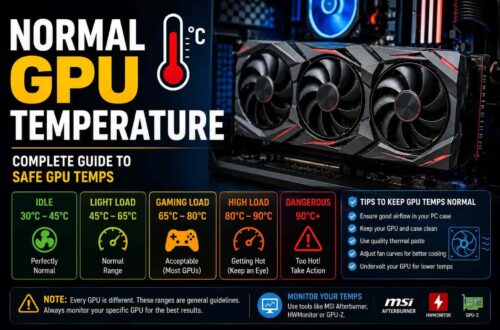
The PNY RTX 4090 XLR8 Gaming VERTO EPIC-X RGB maintained GPU core temperatures of 68.7 degrees Celsius under load, with GPU hotspot and memory junction temperatures also well managed, performing better than the NVIDIA Founders Edition in thermal testing. Outperforming the Founders Edition on thermals is not something most people expect from a brand they consider a second-tier option.
The XLR8 lineup in particular uses a triple-fan setup that PNY has designed to run quietly. The PNY RTX 4070 SUPER XLR8 VERTO EPIC-X features a rare combination of being a two-slot, triple-fan GPU that is also overclocked out of the box, a design fitting for those building a small form factor PC without compromising on performance. That combination of compact sizing and effective cooling is genuinely hard to find at competitive price points.
Where PNY’s cooling solutions show their limits is in sustained maximum-load workloads such as long rendering sessions or continuous GPU compute tasks. PNY cards generally feature competent but not class-leading cooling, and they might run a few degrees warmer or be slightly louder than premium models from ASUS or MSI, but they are rarely bad. For gaming workloads, which are naturally variable rather than a constant 100 percent GPU load, the temperature differences between PNY and premium-tier brands are rarely noticeable in practice.
Build Quality and Design Aesthetics
PNY’s build quality sits comfortably in the solid midrange. Cards feel substantial, not cheap. The heatsink assemblies on their XLR8 models use aluminum fins with copper heat pipes, the PCBs are well-constructed, and there is nothing visibly questionable about the physical hardware. You are not getting the same military-grade component language that ASUS uses in its ROG marketing, but you are also not getting a flimsy budget card.
Where PNY diverges from competitors like MSI or ASUS is in visual flair and premium finish. PNY’s aesthetic is clean and somewhat understated by gaming GPU standards. The EPIC-X RGB branding on their higher-end cards does include RGB lighting along the shroud, but the overall design is more subdued than the aggressive, angular styling of ROG Strix or MSI Suprim cards. If you have a visible PC build with a side panel and you care deeply about how your GPU looks inside the case, PNY gives you less to work with visually than its competitors at similar price points.
That design restraint is not necessarily a flaw. Plenty of builders prefer a cleaner look. But it is something worth knowing before you commit, especially if the visual element of your build matters to you.
PNY’s Overclocking Headroom and Software
PNY’s offerings are well-rounded and quiet, but they are not designed to push the envelope and break any overclocking records. They are instead well-rounded picks for both gamers and creative professionals alike.
PNY offers a software utility called VelocityX for GPU monitoring, fan speed control, and overclocking. The tool works and covers the basic functions most users ever actually need. However, compared to ASUS’s GPU Tweak III or MSI’s Afterburner-compatible ecosystem, VelocityX is relatively bare-bones. If you are someone who enjoys dialing in precise voltage curves, pushing maximum overclock headroom, and fine-tuning every aspect of GPU behavior through software, PNY’s toolset will feel limiting. If you are someone who plugs the card in, plays games, and never opens overclocking software, the difference is completely irrelevant to your daily experience.
The Warranty and Customer Support Reality
This is the section where PNY’s reputation takes its most significant hit, and it deserves to be addressed with full honesty rather than softened for the sake of balance.
PNY’s warranty terms vary by product line. Their XLR8 gaming GPU line has offered what they market as a lifetime warranty, but the important caveat here is that PNY’s definition of “lifetime” refers to the market lifespan of the card, not the purchaser’s lifetime. Once a card is discontinued from active sale, that warranty coverage ends by PNY’s own terms. That is a meaningful distinction that many buyers miss when they see a lifetime warranty advertised.
Real-world RMA experiences with PNY are genuinely inconsistent. Some users report fast, problem-free replacements with good communication. However, multiple user reports describe frustrating experiences, including requirements to pay for return shipping on defective cards, wait times of a month or more, and, in some European cases, representatives allegedly not honoring legally required warranty periods. One frequently cited complaint is being required to send the card in and wait an extended period without a loaner or expedited solution, which leaves a gaming or work PC inoperable for weeks.
The support experience also appears to vary noticeably by region. North American users tend to report better experiences than European buyers, where PNY’s support infrastructure seems thinner. If you are purchasing in a region where PNY does not have a robust local support operation, that is a real risk worth factoring into your buying decision.
PNY for Professional and Workstation Use
This is where PNY’s reputation is most justified and most consistent. PNY shines in professional workstations. Their Quadro and RTX professional GPUs are renowned for stability, reliability, and optimized drivers for demanding applications like CAD, video editing, and 3D rendering.
Professional GPU buyers have different priorities from gamers. Stability over multiple hours of continuous operation matters more than peak frame rate headroom. Driver reliability for certified professional software matters more than overclocking potential. PNY has served that market for decades and built a genuinely strong track record in it. If your primary use case is professional creative work, video production, 3D modeling, or scientific computing, PNY is not just a reasonable option. It is one of the most historically reliable choices in that specific category.
PNY vs ASUS vs MSI: Who Should Buy Which Brand
Choosing between PNY and premium brands like ASUS or MSI usually comes down to three things: budget, use case, and how much you value post-purchase support infrastructure.
The builder who prioritizes price and compactness and does not plan on aggressive overclocking or needs the quietest possible build is the profile that fits PNY best. It is a solid, safe choice when the price is right.
ASUS costs more and delivers more. Better cooling headroom on their high-end models, more polished software, stronger global support networks, and longer standard warranty coverage on premium lines. If your budget allows and you want the most complete package, ASUS is the harder-to-argue-with option.
MSI sits between the two, offering strong cooling performance, competitive pricing on many models, and a more gaming-focused aesthetic than PNY. For buyers who want premium features without necessarily paying ASUS ROG prices, MSI is often the sweet spot.
PNY wins on compactness, professional reliability, and specific value opportunities where their pricing undercuts equivalent cards from other brands without meaningful performance sacrifice.
Should You Buy a PNY GPU?
Yes, with the right expectations in place. PNY makes genuinely capable graphics cards that perform identically to same-spec cards from any other brand at the GPU level. Their higher-end XLR8 models deliver strong thermals, solid factory overclocks, and competitive performance that has held up well in independent reviews. For professional users, PNY’s reputation in the workstation market provides additional confidence in long-term reliability.
The two genuine concerns are the warranty and support experience, which can be inconsistent depending on region and specific circumstances, and the lack of overclocking depth for enthusiast builders who want to push their hardware to its limits.
If you find a PNY card at a competitive price for the GPU tier you need, it is a trustworthy buy. Check reviews specific to the model you are considering, verify the warranty terms for your region, and you will almost certainly end up with a card that serves you well for years.
FAQs
Is PNY better than ASUS for gaming GPUs?
Not overall, but it depends on what you are paying for. ASUS generally offers superior cooling headroom on high-end models, better software tools, and a stronger global support network. PNY delivers the same raw gaming performance at a lower price point on many models. For pure frame rate performance, they are virtually identical. For the full ownership experience, ASUS edges ahead.
Does PNY offer a good warranty on its graphics cards?
PNY markets a lifetime warranty on some of their XLR8 gaming GPUs, but the term “lifetime” refers to the commercial lifespan of the card rather than the buyer’s lifetime. Once a card model is discontinued, that warranty typically expires or becomes limited. Standard warranty terms and regional coverage vary, so it is important to check the exact policy for your product and region before purchasing.
Are PNY GPUs good for content creation and video editing?
Absolutely. PNY GPUs perform very well for content creation workloads like video editing, 3D rendering, and design work. Their long-standing partnership with NVIDIA and experience in professional graphics hardware make them a solid choice for both gaming and creative applications.
Why does PNY get less attention than MSI or ASUS in gaming communities?
PNY has traditionally focused more on the professional and OEM market rather than aggressive consumer gaming branding. Unlike ASUS ROG or MSI, they invest less in esports sponsorships, influencer marketing, and gaming-focused branding. As a result, they are less visible in gaming communities despite offering competitive hardware.
Is a PNY GPU reliable for long-term use?
Yes, for most users, PNY GPUs are reliable over the long term. Many older generations, like GTX 10-series and RTX 20-series cards, are still running well today. The main concern is not day-to-day performance but variability in customer support and warranty handling depending on region.